In today’s SEO world, backlinks are still very important. They help search engines understand that your website is trusted and valuable. But the way we build links has changed a lot over the years.
Now businesses often ask one common question:
Table of Contents
ToggleDigital PR vs. Traditional Link Building – Which Is Better?
For companies and brands working with a digital marketing agency in Kolkata, choosing the right strategy can make a big difference in rankings, visibility, and long-term growth. In this article, Lee & Nee Softwares (Exports) Ltd explains both approaches in simple terms and helps you decide which one works best for your business.
What Is Traditional Link Building?
Traditional link building is the older and more direct way of getting backlinks.
Common traditional link-building methods:
-
Guest posting on blogs
-
Outreach emails asking for links
-
Submitting websites to directories
-
Resource page link requests
-
Partner or supplier links
The main goal here is to get a backlink, often pointing to a specific service or product page.
Advantages of traditional link building:
-
Faster to execute
-
More control over anchor text
-
Easier to target specific pages
-
Works well for niche or local websites
Limitations:
-
Many sites accept guest posts only for money
-
Low-quality links can harm SEO
-
Google may penalise unnatural link patterns
-
Limited brand visibility beyond SEO
Traditional link building still works, but only when done carefully and ethically.
Also read this Blog: 5 Tactics You Must Use To Build A Good Content Marketing Strategy
What Is Digital PR?
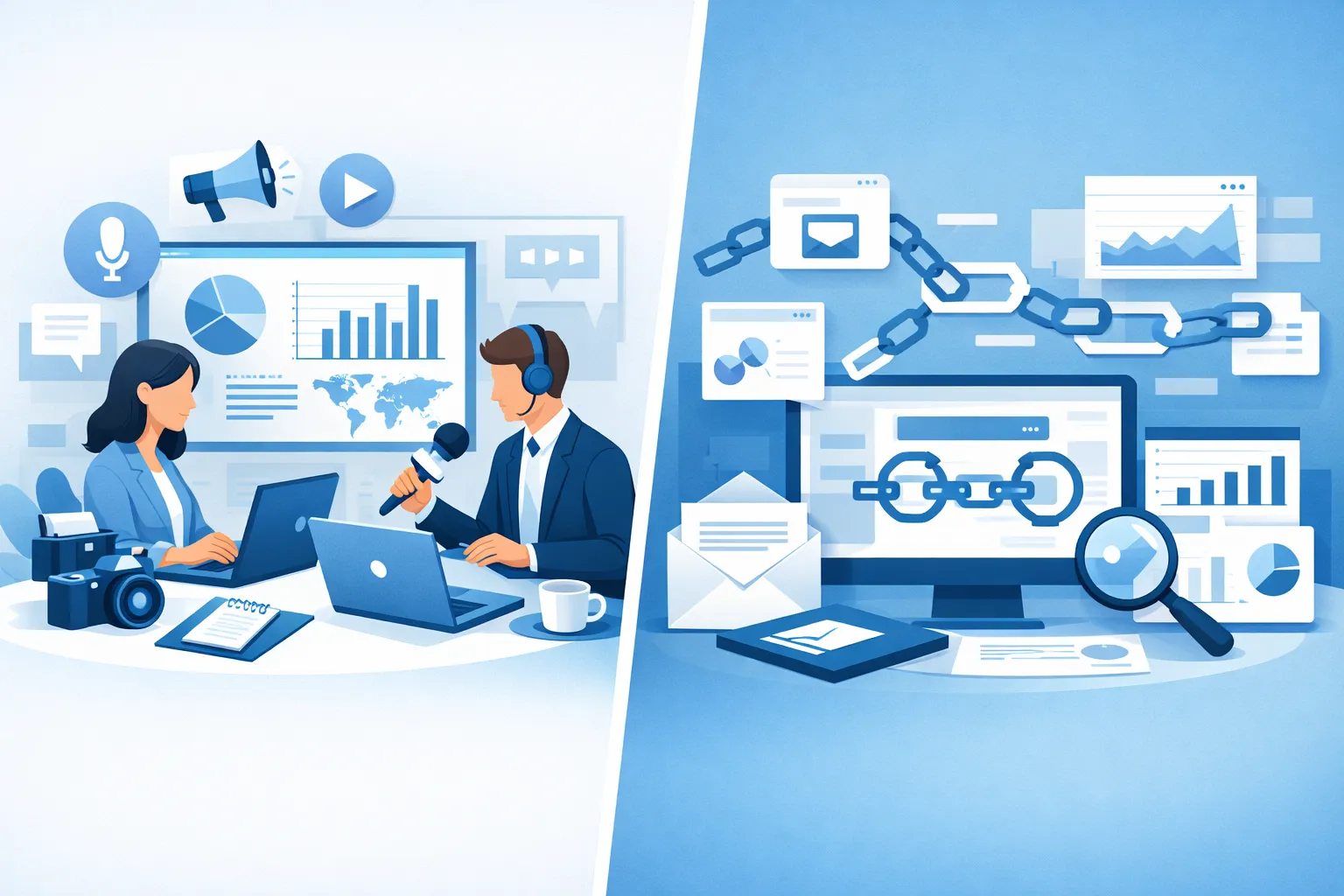
Digital PR is a modern approach that combines public relations and SEO.
Instead of asking for links, digital PR focuses on earning links naturally through newsworthy content.
Common digital PR activities:
-
Data-driven research and reports
-
Surveys and industry studies
-
Press releases with real stories
-
Journalist outreach
-
HARO (Help a Reporter Out) responses
-
Creative campaigns and local news stories
Here, backlinks are a result, not the only goal.
Advantages of digital PR:
-
High-quality editorial backlinks
-
Strong brand awareness
-
Trust and authority building
-
Referral traffic from news sites
-
Lower risk of Google penalties
Also read this Blog: AI-Generated Content Isn’t The Problem – Your Strategy Is
Limitations:
-
Takes more planning and creativity
-
Results are not instant
-
No full control over anchor text
-
Higher effort compared to basic outreach
Digital PR vs Traditional Link Building (Quick Comparison)
| Factor | Digital PR | Traditional Link Building |
|---|---|---|
| Main goal | Brand + links | Links only |
| Link quality | Very high | Medium to high |
| Google safety | Very safe | Risky if misused |
| Speed | Slower | Faster |
| Brand visibility | Strong | Limited |
| Scalability | Medium | High |
What Google Prefers Today
Google clearly states that manipulative link building is against its guidelines. Paid links, link exchanges, and large-scale guest posting just for SEO can be risky.
Editorial links from:
-
News websites
-
Authority blogs
-
Industry publications
are considered the safest and most valuable. These links usually come from digital PR efforts, not direct link requests.
Also read this Blog: How Is Google Handling Spammy And Low-Quality Content?
Which Strategy Is Better?
The honest answer is: it depends on your business goals.
Digital PR is better when:
-
You want long-term brand growth
-
You want links from high-authority websites
-
You are building trust in a competitive market
-
You want press coverage and visibility
Traditional link building is better when:
-
You need faster SEO support
-
You want to rank specific service pages
-
You operate in a niche market
-
You have a limited budget
For most businesses, using only one strategy is not ideal.
Also read this Blog: How to Use Google Ads & Meta Ads Effectively in the Kolkata Market?
The Best Approach: A Hybrid Strategy
Leading SEO agencies, including Lee & Nee Softwares (Exports) Ltd, recommend a hybrid model.
How a hybrid strategy works:
-
Use digital PR for authority, branding, and strong editorial links
-
Use traditional link building carefully for relevance and page-level SEO
-
Focus on quality over quantity
-
Track both SEO and brand performance
This balanced approach reduces risk and improves long-term results.
Why This Matters for a Digital Marketing Agency in Kolkata
For businesses in Kolkata:
-
Local press coverage improves trust
-
Authority links help local SEO
-
Brand mentions increase search demand
-
Ethical SEO builds long-term stability
A digital marketing agency in Kolkata must understand both techniques to serve clients across industries like IT, healthcare, real estate, education, and ecommerce.
How Success Is Measured
For Digital PR:
-
Number of media mentions
-
Quality of referring domains
-
Brand search growth
-
Referral traffic
For Link Building:
-
Growth in referring domains
-
Keyword ranking improvement
-
Organic traffic increase
-
Conversion performance
Both should be tracked together for the best insight.
Common Mistakes to Avoid
-
Buying links in bulk
-
Overusing exact-match anchor text
-
Publishing low-quality guest posts
-
Expecting instant results from PR
-
Ignoring brand signals and trust
SEO is a long-term game. Shortcuts usually fail.
Final Thoughts
Digital PR and traditional link building are not enemies. They are tools.
Digital PR builds authority, trust, and brand value.
Traditional link building provides targeted SEO support.
For sustainable growth, businesses should combine both — with strategy, ethics, and patience.
At Lee & Nee Softwares (Exports) Ltd, we believe smart SEO is not about chasing links, but about building real online credibility that search engines and users both trust.